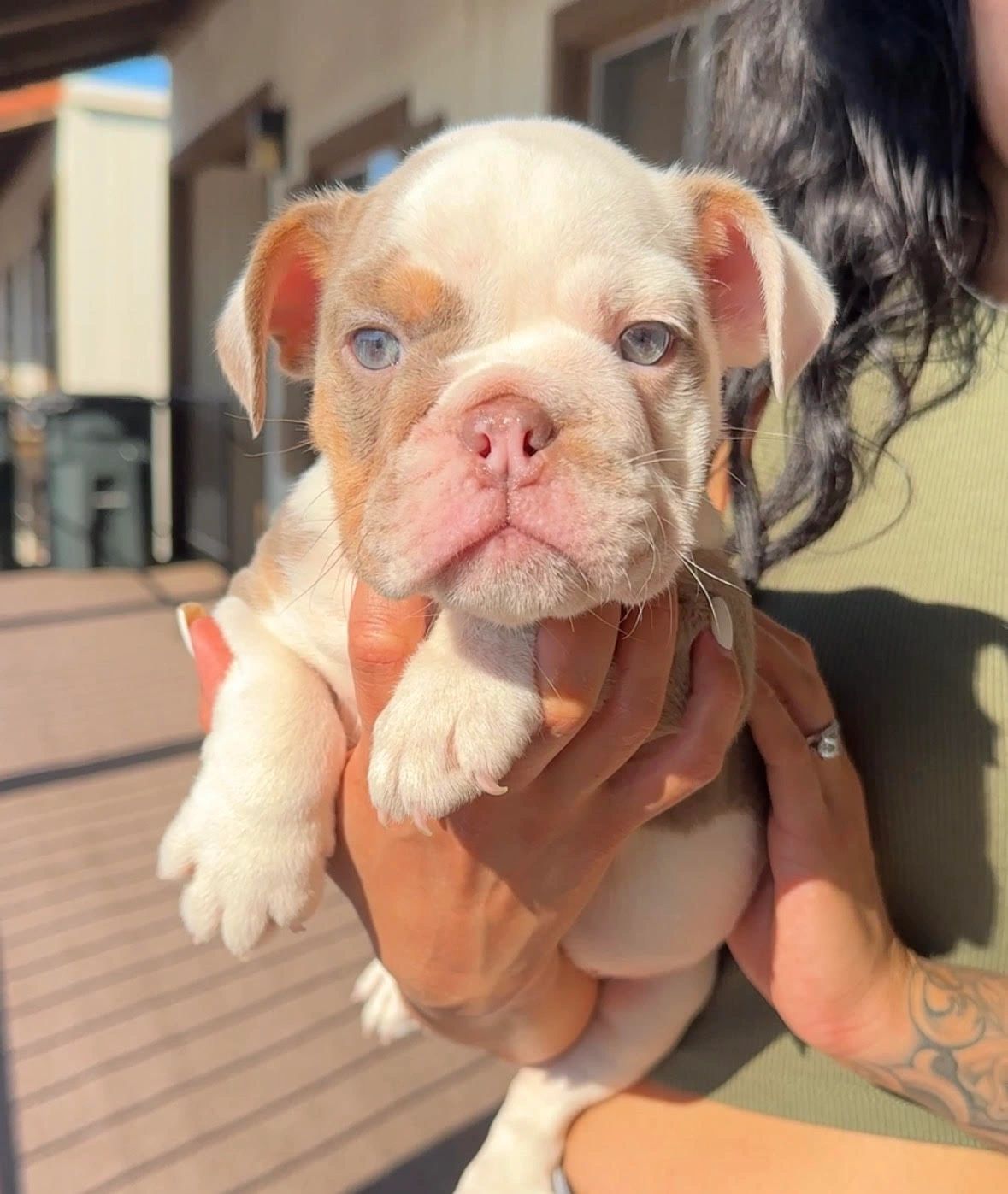
Your first week, in order
- Book the vet visit, ideally within the first few days.
- Start pet insurance before that visit.
- Set up one safe room plus a crate, and supervise everywhere else.
- Keep the breeder's food and feed on a schedule.
- Skip dog parks and pet store floors until your vet says vaccinations are complete.
1. Make the house safe before the puppy explores it
Bulldog puppies are heavy, low to the ground and surprisingly determined. Before day one:
- Block stairs with gates, top and bottom. A tumble down stairs can injure a growing spine, and bulldogs are not built to catch themselves.
- Fence the pool. Bulldogs are poor swimmers. Their build and flat faces make it hard to keep their heads above water, and drownings happen fast. Never leave a bulldog unattended near water.
- Lift cords, shoes, socks, kids' toys and anything swallowable. Bulldogs chew, and blockages are surgery.
- Check plants and cleaners. Many common houseplants are toxic to dogs.
- Plan the cool spot. Air conditioning, shade, and a cooling mat for hot days.
2. Small spaces, big supervision
Free run of the whole house is how puppies get hurt and how house training goes sideways. For the first weeks:
- One safe room with easy-clean floors, where the puppy spends unsupervised time in a playpen or crate.
- The rest of the house only with you watching, which teaches boundaries and catches accidents before they become habits.
- The crate is a bed, not a punishment. Feed meals in it, leave the door open during the day, and keep sessions short at first.
- Discourage jumping off couches and beds from day one. Frenchies especially are prone to spine problems, and a ramp or steps saves trouble later.
3. Why you should skip dog parks for now
This is the rule new owners break most often, and it's the one with the worst consequences.
Puppies get a series of vaccinations, usually finishing around 16 weeks. Until that series is complete, your puppy is not protected. Parvovirus and distemper are the two to know. Parvo is brutal, expensive to treat and often fatal in puppies, and it survives in soil and on surfaces for months. Dog parks, pet store floors, rest stops and sidewalks outside busy vet clinics are exactly where it lives.
What to do instead, until your vet clears you:
- Socialize on your own property and in friends' yards, with healthy, fully vaccinated adult dogs you know.
- Carry your puppy through public places rather than letting them walk.
- Invite people over: different ages, hats, beards, wheelchairs, umbrellas. Socialization is about people and sounds as much as dogs.
- Ask your vet about puppy classes that require proof of vaccination, since those are usually held on disinfected indoor floors.
Socialization still matters enormously in these weeks. The goal is to do it safely, not to skip it.
4. Feeding through the puppy stage
- Don't switch food right away. Keep whatever the breeder was feeding for at least the first couple of weeks, then change gradually over a week if you want to, mixing increasing amounts of the new food in.
- Feed on a schedule, usually three to four small meals a day for a young puppy, dropping to two as they grow. Your vet can tell you when to change.
- Measure every meal. Bulldogs gain weight easily, and extra weight makes breathing harder and loads their joints and spine. A lean bulldog is a healthier bulldog.
- Choose a complete, balanced puppy food and let your vet confirm it suits your dog.
- Keep treats small, ideally single ingredient, and count them as part of the day's food. Ours are Pawlistic Treats, and we say so plainly.
- Watch for food sensitivities. Loose stools, constant itching or repeat ear infections can mean a food doesn't agree with your dog. Bring it up with your vet before changing anything.
- Fresh water always, in a shallow, heavy bowl that's easy for a flat face to reach.
5. Sort out insurance now, not later
Bulldogs are one of the breeds most likely to need expensive care: airway surgery, skin infections, cherry eye, spine and joint problems. The catch with insurance is that anything showing up before your policy starts is usually excluded for life.
That's why the best moment to buy is right now, while your puppy is young and healthy, ideally before the first vet visit with you. Our bulldog insurance guide explains what a good policy should cover, including hereditary conditions and airway surgery.
6. Heat, exercise and knowing when to stop
Flat-faced dogs overheat faster than other breeds, and heat stroke can turn fatal quickly.
- Walk early morning or evening, and test the pavement with your hand. If it's too hot for your palm, it's too hot for paws.
- Keep it short. Puppies don't need long walks, and a common rule of thumb is a few minutes of walking per month of age, a couple of times a day. Play in short bursts instead.
- Use a harness, never a neck collar, which presses on an already narrow airway.
- Stop at the first sign of trouble: loud, raspy breathing, refusing to move, or a very wide, frantic tongue. Get your dog somewhere cool and offer water.
- Emergency signs: collapse, blue or grey gums, or breathing that doesn't settle. Go to an emergency vet immediately.
Never leave a bulldog in a parked car
Not for a few minutes, not with the windows cracked. Cars heat up fast, and flat-faced breeds have the least margin of any dog.
7. Daily habits that prevent most problems
- Clean and dry the face folds and tail pocket daily with unscented wipes. Two minutes a day prevents most infections. Full routine in our skin care guide.
- Handle the paws, ears and mouth often, so vet visits and nail trims aren't a fight later.
- Short training sessions, five minutes at a time, with small rewards. Bulldogs are smart and stubborn, and they quit when bored.
- Build alone time slowly, starting with a few minutes, so you don't end up with a dog that panics when you leave.
8. Know the warning signs
Call your vet promptly for: loud or labored breathing at rest, vomiting or diarrhea that doesn't stop (especially with lethargy, which can signal parvo), refusing food for more than a day, a red swelling in the corner of the eye, limping or yelping when picked up, or a fold that's red, smelly or oozing.
Have fun with it
The first weeks are a lot of rules, but this is also the best part. Take the photos, teach the silly tricks, let them nap on you. Bulldogs bond hard with their people, and the habits you set now, lean weight, cool days, clean folds and a harness, are what give you a decade of it.
Next: our new owner checklist for everything to buy, and the insurance guide before that first vet visit.