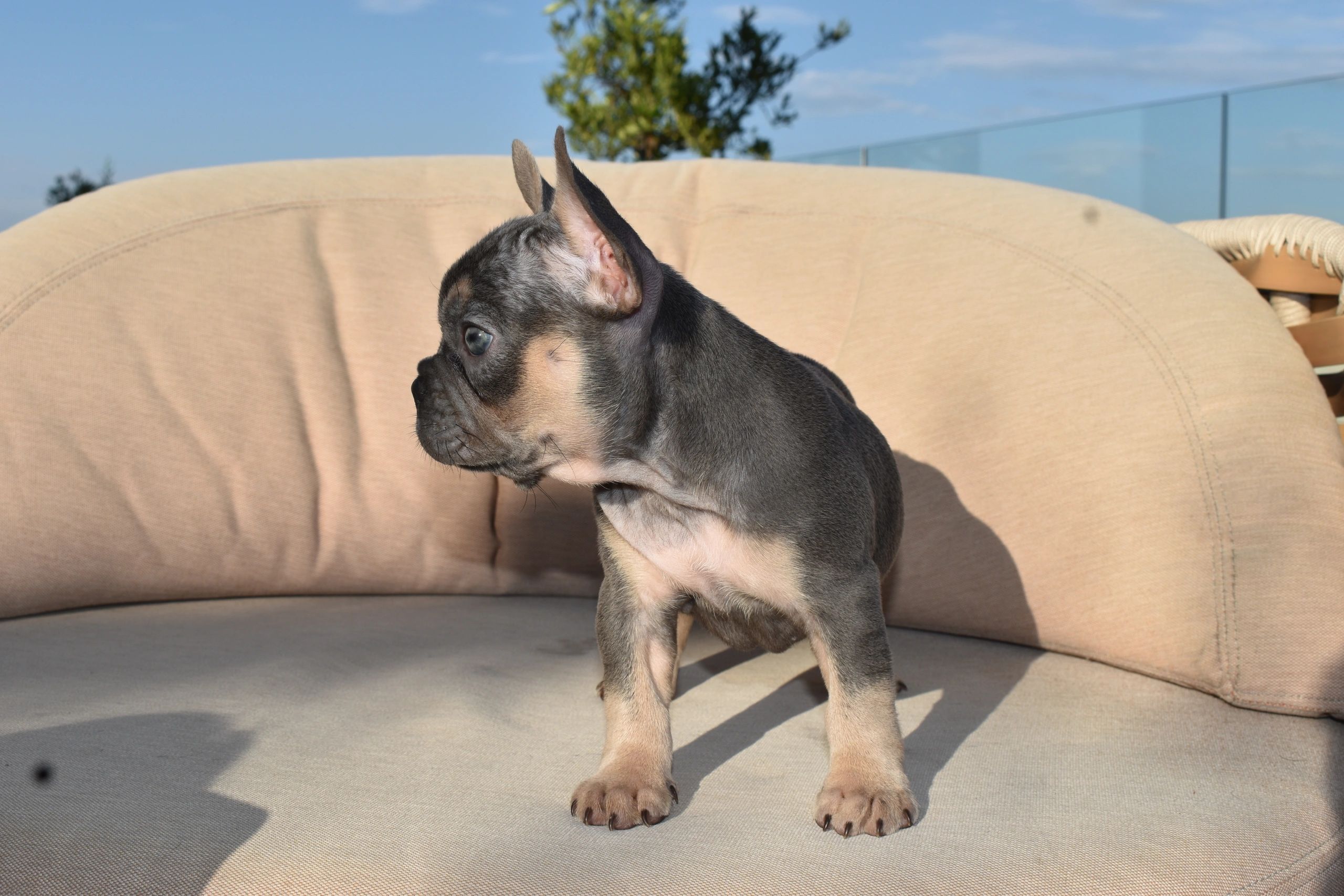
Color drives French bulldog prices more than anything else, including health testing. Having bred and priced these dogs, here's an honest map of the market and what actually justifies a higher price.
Roughly how the tiers stack up
| Tier | Colors | Relative price |
|---|---|---|
| Standard | Fawn, cream, brindle, pied | Lowest; the breed's recognized colors |
| Uncommon | Blue, chocolate | Higher; recessive genes on both sides |
| Rare | Lilac, isabella, new shade | Higher again; several recessives stacked |
| Patterned | Merle, tweed merle, on top of any color | Among the highest |
| Coat | Fluffy, in any color | Highest; long-coat gene plus color |
Exact numbers move with demand and region, so treat this as the shape of the market rather than a price list. A breeder's health testing, contract and reputation should move the price more than they usually do.
What you're paying for
- Genetics and rarity. Recessive colors need both parents to carry them, so fewer puppies exist.
- Breeding costs. Artificial insemination, progesterone timing, and a planned C-section apply to every litter. See why Frenchies are expensive.
- Demand. Social media drives certain colors, and prices follow the trend.
What you should not pay extra for
- Color alone, with no health testing. A rare color from untested parents is the worst value in the breed.
- "Exotic" labels. Terms like exotic or micro aren't recognized standards, and sometimes describe structure that makes breathing harder.
- Merle without DNA proof. Ask for color DNA results on both parents. Two merles should never be paired.
The price that matters more
Whatever you pay up front, the cost of owning a Frenchie is where the real money goes: vet visits, allergies, possible airway or spine surgery. Budget for that first, and set up pet insurance while your dog is young. Our colors guide explains what each color actually is.