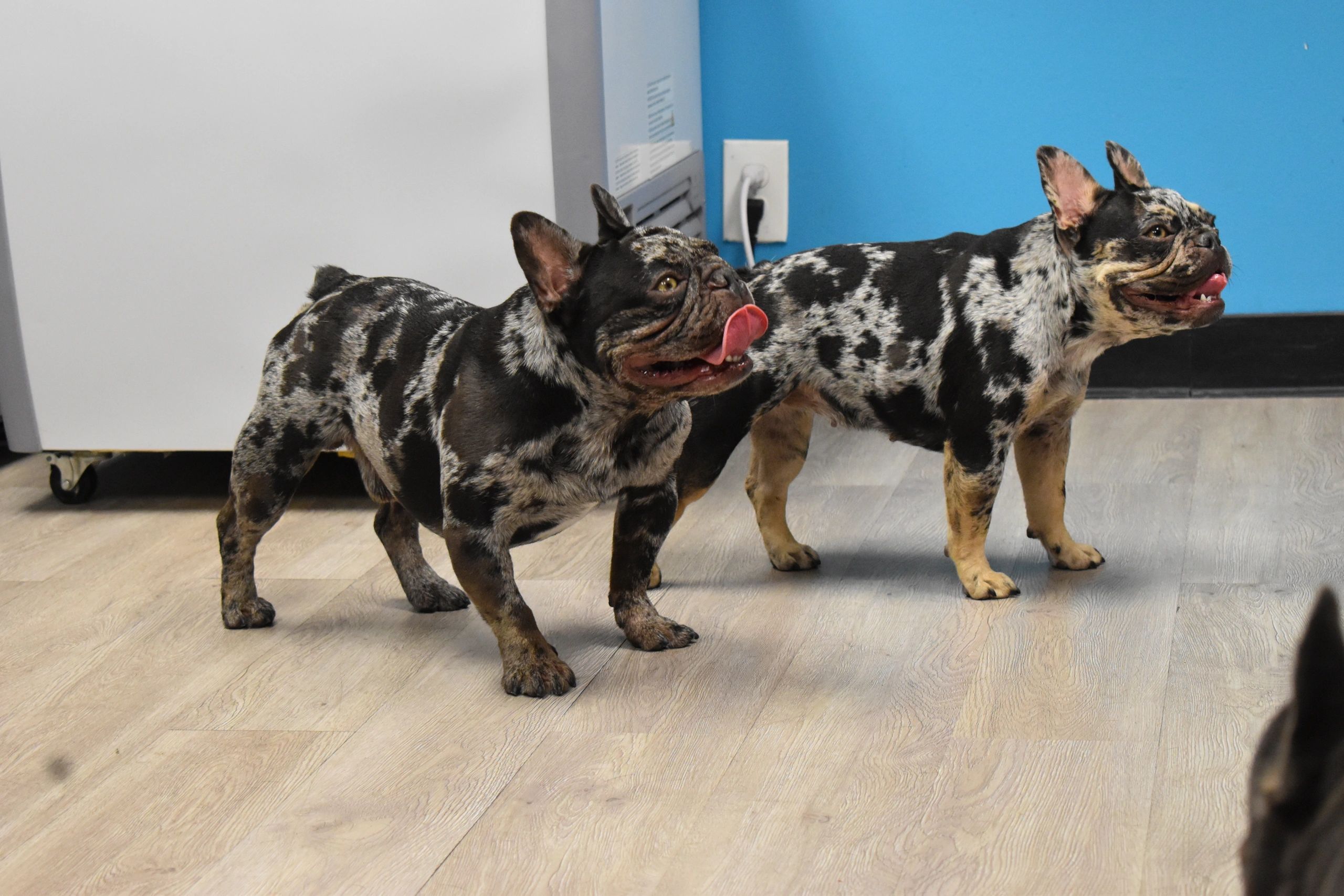
French bulldogs come in far more colors than they did a generation ago. Our own sire, Raider, was a chocolate tweed merle, and his puppies drew more questions than anything else we bred. Here's what these colors actually are.
Standard colors
The breed's traditional colors are fawn, cream, and brindle, often with white markings (pied). Breed clubs recognize these colors for showing. They're usually the least expensive, and they're every bit as good as pets.
The "rare" colors
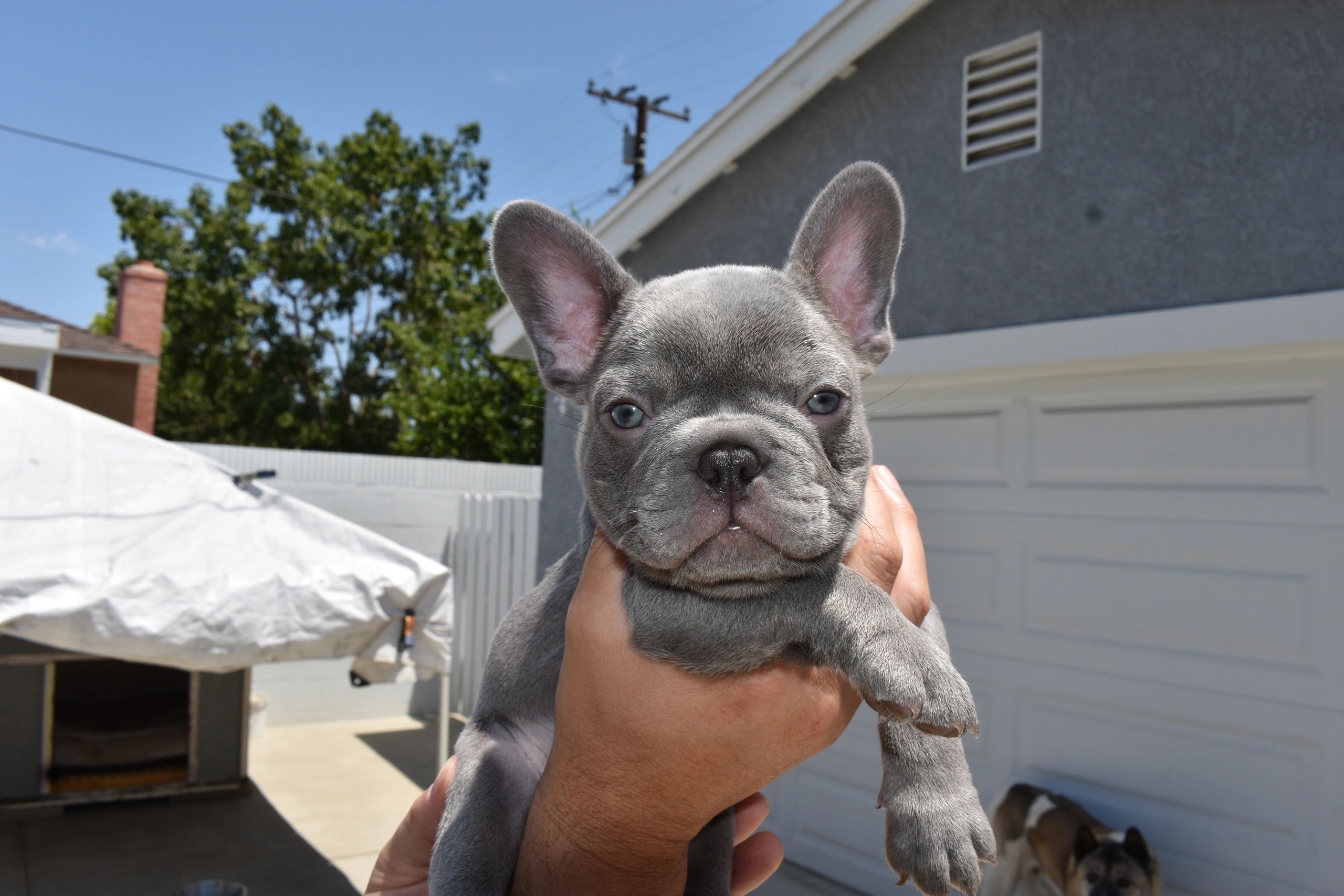
Blue is a diluted black, giving a gray coat. Chocolate (also called cocoa) is a brown coat caused by a different gene. Lilac combines both: a diluted chocolate that looks soft silver-brown. These colors come from recessive genes, so both parents must carry them, which is part of why puppies cost more.
Merle and tweed
Merle is a pattern, not a color. It creates patches of full color over a lighter, marbled background, and often blue or partly blue eyes. It can appear on top of other colors, which is how you get a chocolate merle or lilac merle.
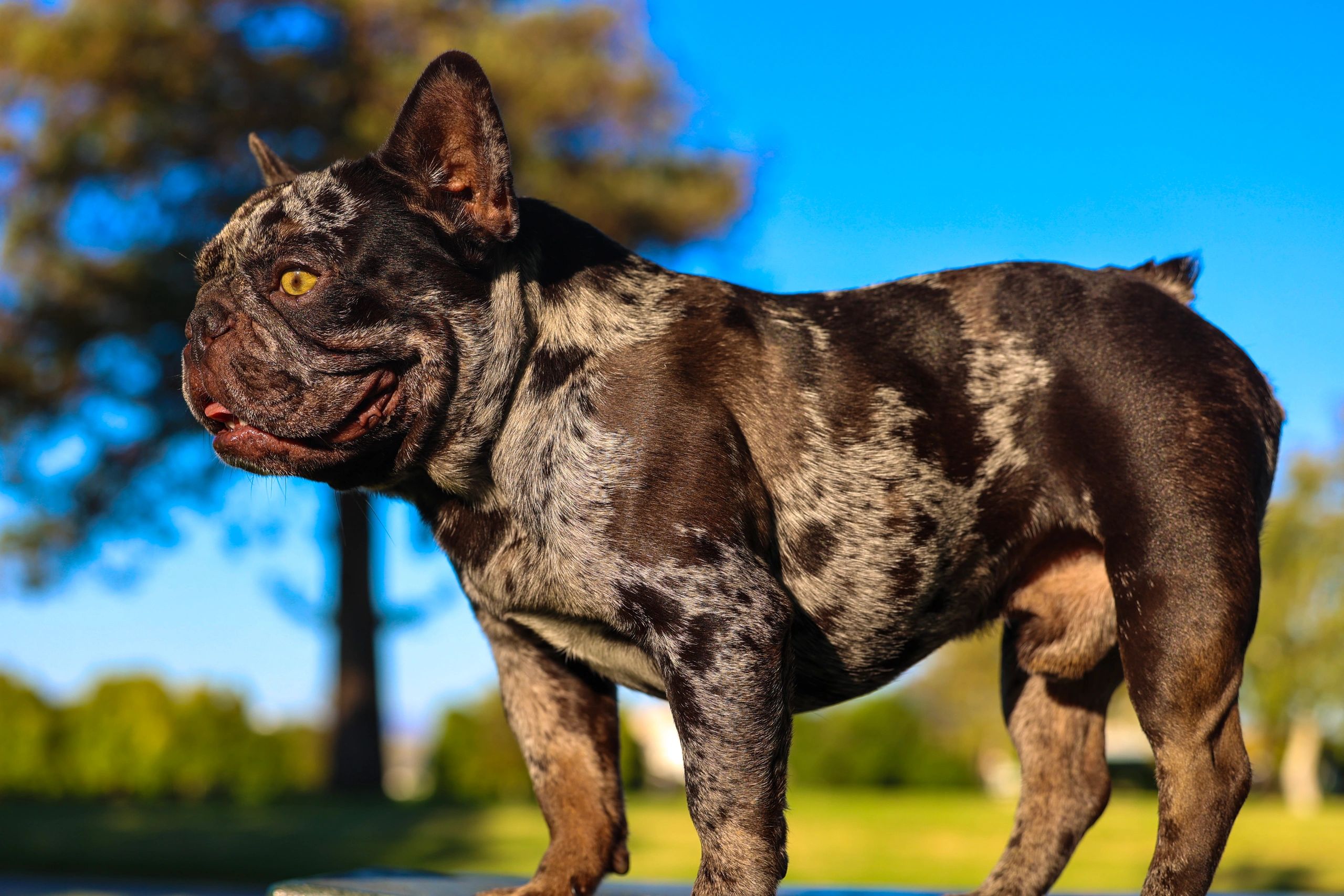
Tweed is a variation of merle that breaks the pattern into more patches of different shades, giving a layered, torn-paper look. A chocolate tweed merle like Raider combines the chocolate color with a tweed merle pattern.
The one rule every merle buyer should know
Two merle parents should never be bred together. A puppy that inherits merle from both parents (a "double merle") has a high risk of being born blind, deaf, or both. Ask any merle breeder for both parents' DNA color results. A good breeder will have them ready.
DNA testing tells you what a dog carries
Coat color isn't always obvious from looks. A DNA test shows which color genes a dog carries, which is how responsible breeders plan pairings and avoid double merles. Owners use them too, to confirm color and screen for some breed health markers. Tests like Embark cover both.
Does color affect health or price?
Color drives price far more than it should. Rare-color puppies often cost thousands more than standard colors. Apart from the double merle risk, what matters for your dog's health is the health of the parents: breathing, spine, and heart. Pick the healthiest puppy first and the color second.
Ready to look for a puppy? Start with our French bulldog buying guide.