
Please note
California Bulldog Association no longer offers stud service or sells puppies. This page is here to help owners understand what breeding involves.
Breeding bulldogs is different from breeding most dogs
English and French bulldogs rarely breed or give birth the way other dogs do. Their build makes natural mating difficult, so most breedings use artificial insemination timed with the female's progesterone levels. Most litters are delivered by planned C-section. That means vet involvement from start to finish, and real risk to the mother.
Health testing comes first
Before choosing a stud, both dogs should be evaluated for the problems the breed is known for:
- Airway function, especially for flat-faced breeds
- Heart health
- Spine and joints
- Genetic tests relevant to the breed and color
A stud owner should ask for the female's health information too. If they don't, keep looking.
Costs to expect
Stud fees are only one line in the budget. Owners should also plan for progesterone testing, insemination, ultrasound or X-ray to count puppies, the C-section itself, puppy vaccines and deworming, and the chance of an emergency. Talk to your vet about realistic numbers in your area before you commit.
Color genetics in plain English
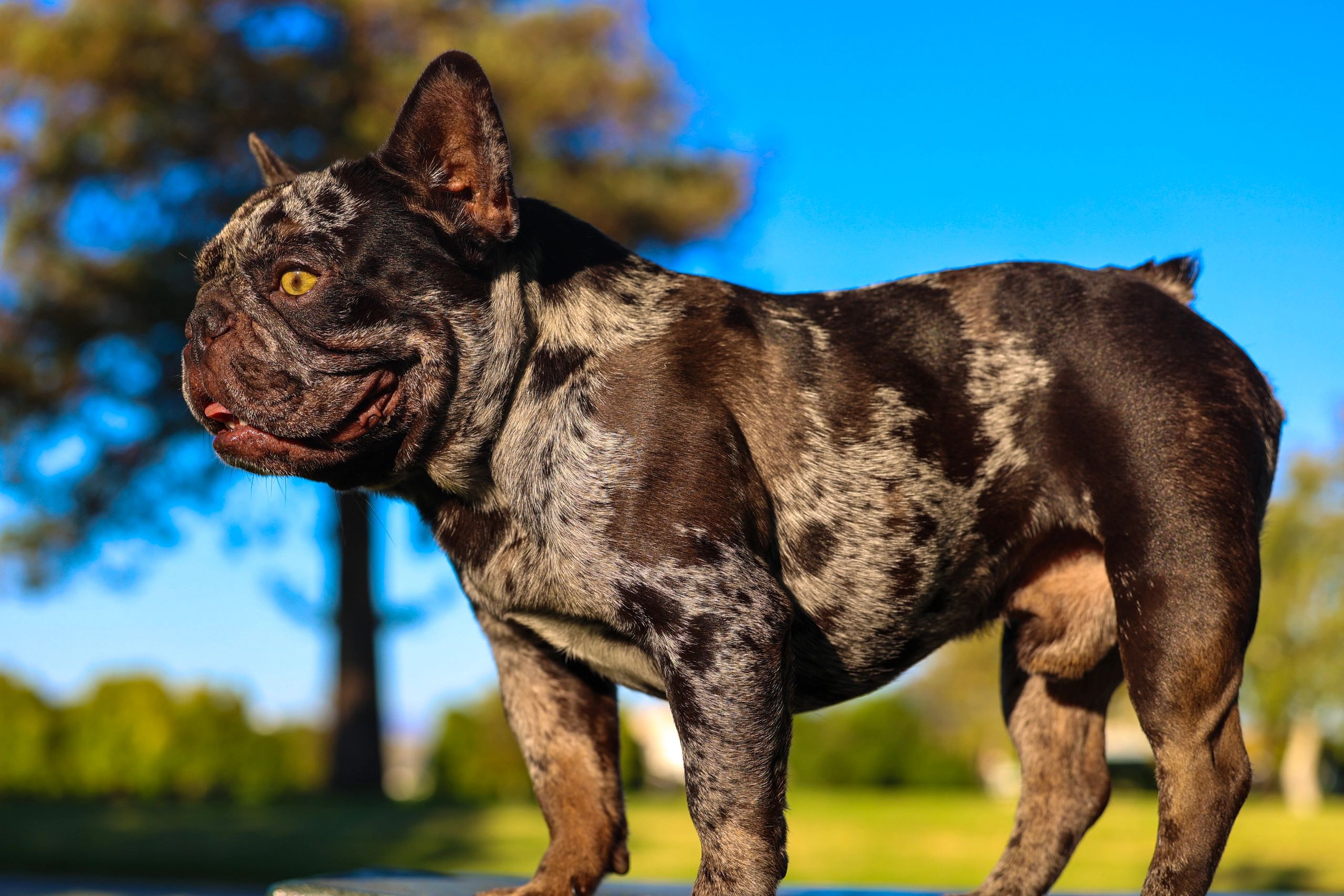
Much of the demand for bulldog studs is about color. Our former sires were good examples:
- Raider, a chocolate tweed merle French bulldog, carried the chocolate, merle, and tweed genes and produced a wide range of patterned puppies.
- Bubs, a lilac and tan English bulldog, was a fourth-generation dog from our own line.
- Chatito, a chocolate and tan English bulldog, carried the genes to produce lilac puppies.
One rule that matters most
Never breed two merle dogs together. Puppies that inherit two merle genes can be born blind, deaf, or both. DNA color testing on both parents prevents this.
For more on how these colors work, see our French bulldog colors guide. For the bigger picture, read things to consider before breeding French bulldogs.